




How does a three - phase current transformer differ from a single - phase current transformer?
 Jul 19, 2026|
 Hey there! As a supplier of three - phase current transformers, I often get asked about the differences between three - phase and single - phase current transformers. So, let's dive right in and break it down.
Basic Function of Current Transformers
First off, let's understand what a current transformer (CT) does. A current transformer is a type of instrument transformer that is used to measure alternating current (AC). It steps down the high current in a circuit to a lower, more manageable current that can be measured by meters, relays, or other instruments. This is super important because directly measuring high currents can be dangerous and is often not practical.

Single - Phase Current Transformers
Single - phase current transformers are designed to work with single - phase electrical systems. These systems are commonly found in residential and small commercial settings. In a single - phase system, there's one alternating current waveform that oscillates between positive and negative values.
The construction of a single - phase CT is relatively straightforward. It usually has a primary winding, which is connected in series with the circuit carrying the high current, and a secondary winding that provides the reduced current output. The ratio between the primary and secondary currents is fixed and is determined by the number of turns in each winding.
For example, if you have a single - phase CT with a ratio of 100:5, it means that for every 100 amps of current in the primary circuit, there will be 5 amps of current in the secondary circuit. This makes it easy to measure the high - current circuit using standard measuring equipment.
Three - Phase Current Transformers
Now, let's talk about three - phase current transformers. Three - phase electrical systems are used in large commercial and industrial applications. In a three - phase system, there are three alternating current waveforms that are 120 degrees out of phase with each other. This configuration provides a more efficient and balanced way of transmitting and distributing electrical power.
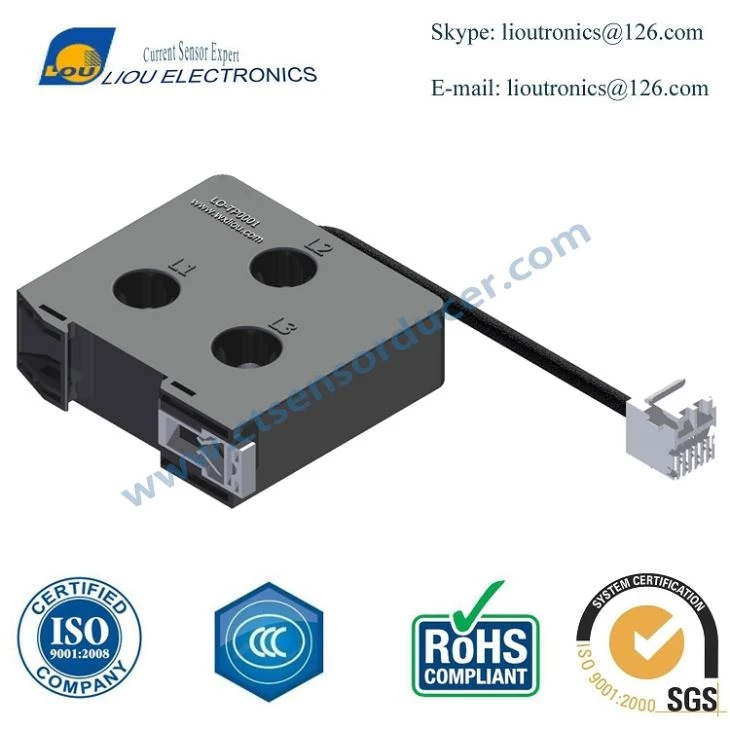
Three - phase current transformers are designed to handle these three - phase systems. They can be either three - separate single - phase CTs combined into one unit or a single, integrated three - phase CT. The main advantage of using a three - phase CT is that it can measure the current in all three phases simultaneously, which is crucial for monitoring and controlling three - phase systems.
Key Differences
1. Circuit Configuration
The most obvious difference is the circuit they are used in. Single - phase CTs are for single - phase circuits, while three - phase CTs are for three - phase circuits. Single - phase systems are simpler and are typically used where the power demand is relatively low, like in homes. Three - phase systems, on the other hand, are used in places where a large amount of power is required, such as factories and large office buildings.
2. Measurement
Single - phase CTs only measure the current in one phase. In a single - phase system, this is sufficient because there's only one current to measure. However, in a three - phase system, measuring only one phase won't give you a complete picture. Three - phase CTs measure the current in all three phases, which allows for a more accurate assessment of the overall power consumption and system performance.
3. Size and Complexity
Three - phase current transformers are generally larger and more complex than single - phase CTs. This is because they need to handle three phases instead of one. They also require more sophisticated design and construction to ensure accurate measurement and proper insulation between the phases.
4. Applications
Single - phase CTs are mainly used in residential and small - scale commercial applications, such as measuring the electricity consumption of a single household or a small shop. Three - phase CTs, on the other hand, are used in industrial applications, power generation plants, and large - scale commercial buildings. They are essential for monitoring and protecting three - phase electrical systems.
Our Three - Phase Current Transformer Offerings
As a supplier, we offer a wide range of three - phase current transformers to meet different customer needs. For example, we have the Class 0.1 Three Phase Current Transformer. This high - precision CT is designed for applications where accurate current measurement is crucial, such as in power metering and control systems.
We also have the Three Phase Current Transformer 1: 2000. This CT has a specific ratio of 1:2000, which makes it suitable for high - current applications. It can step down very high currents to a more manageable level for measurement.
And then there's the 1: 2000 High Precision Three Phase Current Transformer. This combines the high - ratio capability with high precision, making it ideal for applications that require both accurate measurement and the ability to handle high currents.
Why Choose Our Three - Phase Current Transformers
Our three - phase current transformers are built with high - quality materials and advanced manufacturing techniques. We ensure that each CT meets strict quality standards to provide reliable and accurate performance. Whether you're in the power generation industry, industrial manufacturing, or large - scale commercial building management, our CTs can help you monitor and control your three - phase electrical systems effectively.
Let's Connect
If you're in the market for three - phase current transformers, we'd love to have a chat with you. We can help you choose the right CT for your specific application and answer any questions you might have. So, don't hesitate to reach out and start a conversation about your procurement needs.