




How does the over - temperature protection work in a switching power supply inverter?
 Dec 02, 2025|
 Hey there! As a supplier of Switching Power Supply Inverters, I often get asked about how over - temperature protection works in these devices. So, I thought I'd take some time to break it down for you in this blog post.
First off, let's understand why over - temperature protection is so crucial in a switching power supply inverter. Switching power supply inverters are designed to convert DC power to AC power efficiently. During this process, a significant amount of heat is generated. If this heat isn't managed properly, it can lead to a whole bunch of problems. High temperatures can cause components to degrade faster, reduce the overall efficiency of the inverter, and in extreme cases, even lead to a complete failure of the device.
So, how does the over - temperature protection actually work? Well, there are a few key components and mechanisms involved.
Temperature Sensors
The first step in over - temperature protection is detecting when the temperature is getting too high. This is where temperature sensors come in. These sensors are strategically placed throughout the inverter to monitor the temperature of critical components such as the power transistors, transformers, and the printed circuit board (PCB) itself.
There are different types of temperature sensors that can be used. One common type is the thermistor. A thermistor is a resistor whose resistance changes with temperature. By measuring the resistance of the thermistor, the inverter's control circuit can determine the temperature. Another type is the temperature - sensitive diode. These diodes have a forward voltage that varies with temperature, and this voltage change can be measured to gauge the temperature.
Once the temperature sensor detects that the temperature has reached a certain threshold, it sends a signal to the control circuit of the inverter.

Control Circuit
The control circuit is like the brain of the over - temperature protection system. When it receives the signal from the temperature sensor indicating that the temperature is too high, it takes action.
One of the most common actions is to reduce the power output of the inverter. By reducing the power output, less heat is generated, which helps to bring the temperature back down to a safe level. The control circuit can do this by adjusting the switching frequency or the duty cycle of the power transistors in the inverter.
For example, if the inverter is operating at full power and the temperature starts to rise above the safe limit, the control circuit might reduce the duty cycle of the power transistors. This means that the transistors are turned on for a shorter period of time during each switching cycle, which in turn reduces the amount of power being processed and the heat generated.
Heat Sinks and Cooling Fans
In addition to reducing the power output, many switching power supply inverters also use heat sinks and cooling fans to dissipate heat. Heat sinks are made of materials with high thermal conductivity, such as aluminum or copper. They are attached to the power transistors and other heat - generating components to absorb the heat and transfer it to the surrounding air.
Cooling fans are used to increase the airflow over the heat sinks, which helps to carry the heat away more efficiently. When the temperature sensor detects a high temperature, the control circuit can also turn on the cooling fan or increase its speed to improve the cooling effect.
Backup Protection
Sometimes, despite all the efforts of the temperature sensors, control circuit, heat sinks, and cooling fans, the temperature might still continue to rise. In such cases, there is usually a backup protection mechanism in place.
One common backup protection method is a thermal fuse. A thermal fuse is a one - time - use device that melts and breaks the electrical circuit when the temperature exceeds a certain limit. This effectively shuts down the inverter to prevent any further damage.
Now, let's talk about some of the products we offer at our company that are related to the operation of a switching power supply inverter. We have a range of current transformers that are essential for the proper functioning of the inverter.
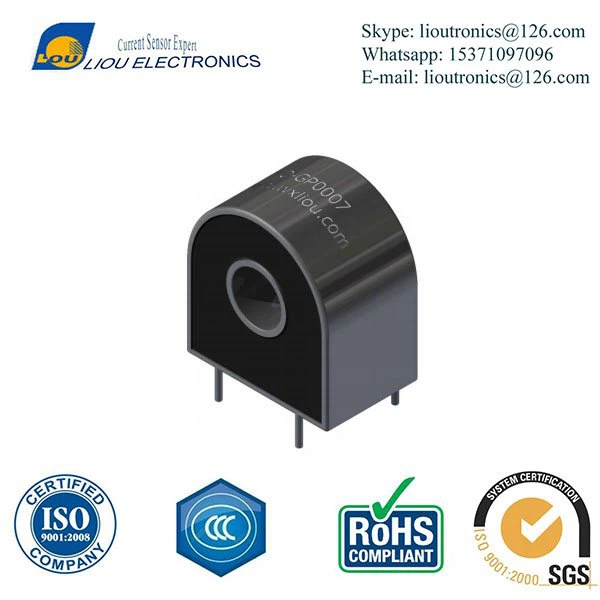
The CR series high precision PCB mount current transformer is a great option for those who need high - precision current measurement in a compact size. It can be easily mounted on the PCB of the inverter, and its high precision ensures accurate current sensing, which is important for the overall performance and protection of the inverter.
Another product is the 1:1000 25A Input Small Volume Current Transformer. This current transformer is designed for applications where space is limited. It has a small volume but still provides reliable current transformation, which is crucial for the power management and protection of the inverter.
We also offer the High Frequency Wide Band Current Transformer. This transformer is suitable for high - frequency applications and has a wide bandwidth, which allows it to accurately measure current in a variety of operating conditions.
If you're in the market for a switching power supply inverter or any of the related products, we'd love to hear from you. Whether you're looking for a standard product or need a custom - designed solution, our team of experts is ready to work with you. Contact us to start a discussion about your requirements and let's see how we can help you find the perfect solution for your needs.
References
- "Power Electronics: Converters, Applications, and Design" by Ned Mohan, Tore M. Undeland, and William P. Robbins
- "Switch - Mode Power Supplies: SPICE Simulations and Practical Designs" by Marty Brown