




How to avoid the saturation of a Center Throughcurrent Transformer?
 Dec 16, 2025|
 As a supplier of Center Throughcurrent Transformers (CTs), I understand the crucial role these devices play in electrical systems. A key challenge in their operation is avoiding saturation, which can significantly impact the accuracy and reliability of current measurement and protection functions. In this blog post, I will share some practical strategies to prevent CT saturation and ensure optimal performance.

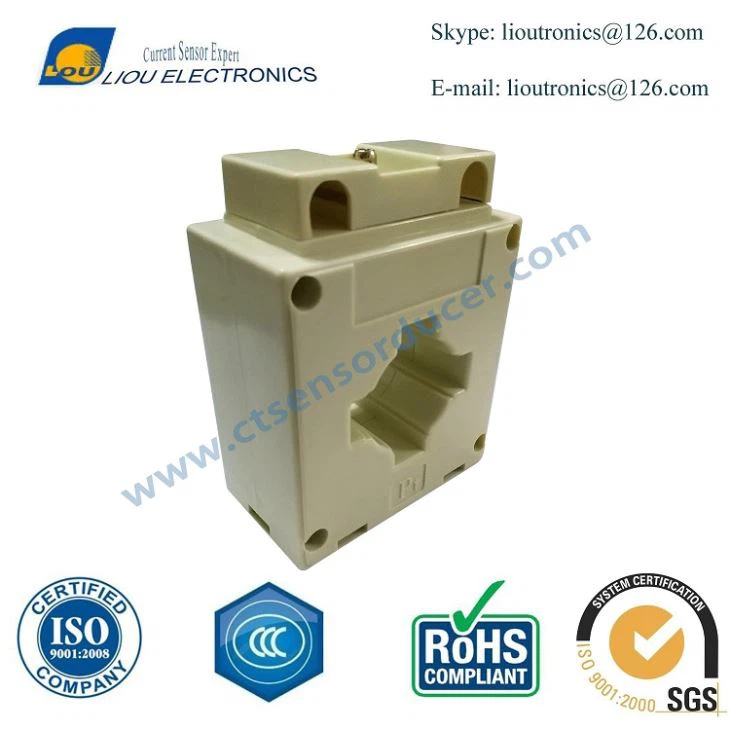
Understanding CT Saturation
Before delving into prevention methods, it's essential to comprehend what CT saturation is. A CT operates based on the principle of electromagnetic induction, where the primary current flowing through a conductor induces a proportional secondary current in the CT winding. However, when the primary current exceeds a certain level, the magnetic core of the CT can become saturated. This means that the magnetic flux density in the core reaches its maximum capacity, and the relationship between the primary and secondary currents is no longer linear. As a result, the CT may fail to accurately represent the primary current, leading to incorrect measurements and potentially compromising the safety and efficiency of the electrical system.
Several factors can contribute to CT saturation. High fault currents, such as those occurring during short - circuits, are one of the leading causes. Additionally, the characteristics of the CT itself, including the type of core material, the cross - sectional area of the core, and the turns ratio, can influence its susceptibility to saturation.
Selecting the Right CT
The first step in avoiding CT saturation is proper selection. When choosing a CT for your application, consider the following factors:
- Current Rating: Ensure that the CT's primary current rating is higher than the maximum expected normal operating current. This provides a margin of safety and reduces the risk of saturation during normal conditions. For example, if your system typically operates at a maximum of 40A, a CT with a primary current rating of 60A would be a reasonable choice. You can explore our 60A: 5A Current Transformer Lo - Mc30I, which is designed to handle such currents efficiently.
- Burden: The burden refers to the impedance connected to the secondary winding of the CT. A high burden can cause the CT to saturate more easily. Select a CT with a low secondary impedance and ensure that the connected burden, such as the load of a measuring instrument or a protective relay, is within the CT's specified range.
- Accuracy Class: Different applications require different levels of accuracy. For metering applications, a higher accuracy class is typically needed. When choosing a CT, select one with an accuracy class that meets the requirements of your system. Our Electrical Precision Current Transformer offers high - accuracy performance for demanding applications.
Monitoring and Maintenance
Regular monitoring and maintenance are essential to detect and prevent CT saturation. Here are some monitoring and maintenance practices:
- Inspection: Periodically inspect the CT for physical damage, such as cracks in the core or insulation breakdown. Any signs of damage can affect the CT's performance and increase the risk of saturation.
- Testing: Conduct regular electrical tests, such as insulation resistance testing and ratio testing. These tests can help identify any degradation in the CT's performance and detect potential saturation issues before they become critical.
- Load Monitoring: Continuously monitor the load current in the electrical system. By keeping track of the current levels, you can detect abnormal increases that may indicate a potential fault or the risk of CT saturation. If the load current approaches the CT's rating, consider taking corrective actions, such as reducing the load or upgrading the CT.
System Design Considerations
Proper system design can also help prevent CT saturation. Here are some design considerations:
- Short - Circuit Calculations: Perform accurate short - circuit calculations to determine the maximum fault current that the CT may encounter. Use these calculations to select a CT with a sufficient short - circuit current rating. Our 200A: 5A Center Through Current Transformer is suitable for systems with relatively high short - circuit currents.
- CT Location: Place the CT in a location where it is not exposed to excessive magnetic interference. Avoid placing the CT near large magnetic fields, such as those generated by high - current conductors or transformers, as these can cause saturation.
- Parallel CTs: In some cases, using parallel CTs can help distribute the current and reduce the risk of saturation. However, careful consideration must be given to the electrical characteristics and connection of the parallel CTs to ensure proper operation.
Addressing High - Fault Currents
High - fault currents are a major cause of CT saturation. To address this issue, you can consider the following methods:
- Current Limiting Devices: Install current - limiting devices, such as fuses or circuit breakers, in the electrical system. These devices can limit the fault current to a level that the CT can handle without saturating.
- Magnetic Shielding: Use magnetic shielding materials around the CT to reduce the impact of external magnetic fields on the CT's core. This can help prevent saturation caused by magnetic interference.
Communication and Training
Finally, effective communication and training are crucial for preventing CT saturation. Ensure that all personnel involved in the installation, operation, and maintenance of the electrical system are aware of the importance of CT saturation prevention. Provide training on CT selection, monitoring, and maintenance procedures to ensure that they can identify and address potential saturation issues in a timely manner.
In conclusion, avoiding CT saturation is essential for the accurate and reliable operation of electrical systems. By selecting the right CT, implementing proper monitoring and maintenance practices, considering system design factors, addressing high - fault currents, and providing adequate communication and training, you can significantly reduce the risk of CT saturation.
If you are interested in learning more about our Center Throughcurrent Transformers or are looking for solutions to avoid CT saturation in your specific application, I encourage you to contact us for a procurement discussion. We have a team of experts who can provide you with personalized advice and guidance to meet your needs.
References
- Electrical Power Systems Design and Analysis, Third Edition by Turan Gonen
- Handbook of Electrical Engineering by Roger C. Dorf