




How to avoid the self - resonance of a Center Throughcurrent Transformer?
 Nov 12, 2025|
 Hey there! As a supplier of Center Throughcurrent Transformers, I've seen firsthand how self - resonance can be a real pain in the neck for users. Self - resonance can cause all sorts of issues, from inaccurate current measurements to potential damage to the transformer itself. So, in this blog, I'm gonna share some tips on how to avoid the self - resonance of a Center Throughcurrent Transformer.
Understanding Self - Resonance in Center Throughcurrent Transformers
First things first, let's talk about what self - resonance is. In a Center Throughcurrent Transformer, self - resonance occurs when the inductance and capacitance within the transformer form a resonant circuit. When the frequency of the current passing through the transformer matches the resonant frequency of this circuit, the amplitude of the current can increase significantly. This can lead to overheating, distortion of the output signal, and even failure of the transformer.
The resonant frequency of a Center Throughcurrent Transformer is determined by its physical characteristics, such as the number of turns in the coil, the core material, and the capacitance between the windings. Different transformers have different resonant frequencies, so it's important to know the specific resonant frequency of the transformer you're using.
Factors Affecting Self - Resonance
There are several factors that can affect the self - resonance of a Center Throughcurrent Transformer. One of the main factors is the load impedance. If the load impedance is too low, it can cause the resonant frequency to shift, increasing the likelihood of self - resonance. On the other hand, if the load impedance is too high, it can also have a negative impact on the performance of the transformer.
The core material of the transformer also plays a crucial role. Different core materials have different magnetic properties, which can affect the inductance and, consequently, the resonant frequency. For example, a transformer with a ferrite core may have a different resonant frequency compared to one with a silicon steel core.
Another factor is the operating temperature. As the temperature changes, the electrical properties of the materials in the transformer can also change. This can cause the resonant frequency to shift, potentially leading to self - resonance.
How to Avoid Self - Resonance
1. Select the Right Transformer
The first step in avoiding self - resonance is to select the right Center Throughcurrent Transformer for your application. Consider the frequency range of the current you'll be measuring. Make sure the transformer's resonant frequency is well outside this range. For example, if you're working with a 50Hz or 60Hz power system, you'll want a transformer with a resonant frequency that's much higher or much lower than these frequencies.
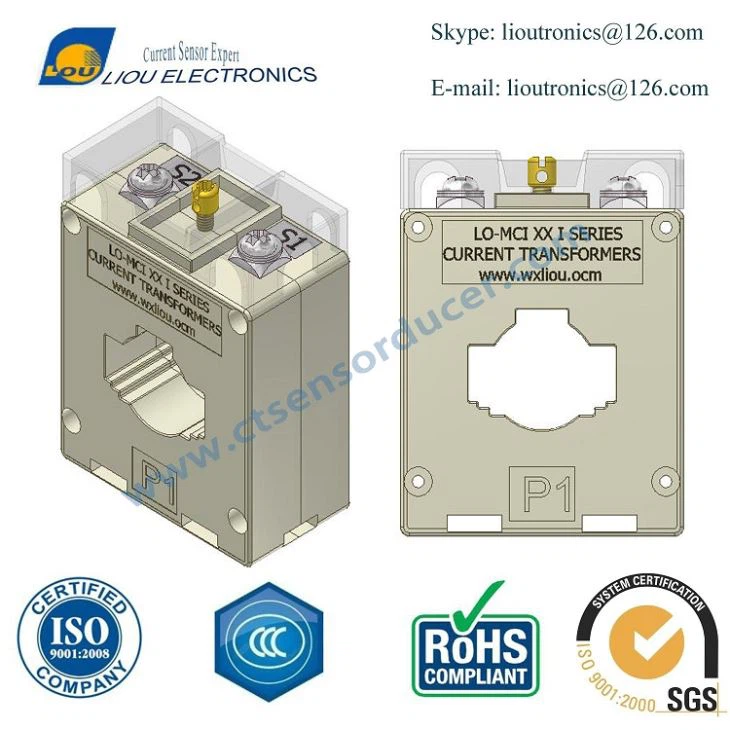

We offer a wide range of Center Throughcurrent Transformers to meet different needs. Check out our 60A: 5A Current Transformer Lo - Mc30I and 200A: 5A Center Through Current Transformer, which are designed to operate stably in various frequency environments.
2. Optimize the Load Impedance
As mentioned earlier, the load impedance can have a big impact on self - resonance. You need to make sure the load impedance is within the recommended range specified by the transformer manufacturer. If the load impedance is too low, you can add a series resistor to increase it. If it's too high, you can add a parallel capacitor to decrease it.
It's also a good idea to measure the load impedance regularly to ensure it remains stable. Any significant changes in the load impedance could indicate a problem that needs to be addressed.
3. Control the Operating Temperature
To prevent temperature - induced shifts in the resonant frequency, you need to control the operating temperature of the transformer. This can be done by providing adequate ventilation around the transformer. Make sure there's enough space for air to circulate and carry away the heat generated by the transformer.
If the transformer is installed in a high - temperature environment, you may need to use additional cooling methods, such as fans or heat sinks. Monitoring the temperature of the transformer during operation can also help you detect any potential issues early on.
4. Use Shielding
Electromagnetic interference (EMI) can also affect the performance of a Center Throughcurrent Transformer and potentially cause self - resonance. Using shielding can help reduce the impact of EMI. A shielded transformer can prevent external electromagnetic fields from coupling with the transformer's windings and causing unwanted resonance.
There are different types of shielding materials available, such as copper or aluminum foil. Make sure the shielding is properly grounded to ensure its effectiveness.
Case Studies
Let's take a look at a couple of real - world examples of how these strategies can work.
Case 1: A customer was using a Center Throughcurrent Transformer in a power monitoring system. They were experiencing inaccurate measurements and occasional overheating. After analyzing the situation, we found that the load impedance was too low, which was causing the resonant frequency to shift and leading to self - resonance. We recommended adding a series resistor to increase the load impedance. After making this change, the problem was resolved, and the transformer started operating normally.
Case 2: Another customer had a transformer installed in a high - temperature industrial environment. The transformer was failing frequently due to self - resonance caused by temperature - induced changes in the resonant frequency. We suggested installing a fan to improve ventilation and reduce the operating temperature. This simple solution helped to stabilize the resonant frequency and prevent self - resonance.
Conclusion
Avoiding self - resonance in a Center Throughcurrent Transformer is crucial for ensuring accurate current measurements and the long - term reliability of the transformer. By selecting the right transformer, optimizing the load impedance, controlling the operating temperature, and using shielding, you can significantly reduce the risk of self - resonance.
If you're in the market for a high - quality Center Throughcurrent Transformer or need more advice on avoiding self - resonance, we're here to help. We also have the 200A: 5A Center Through Current Sensor Lo - Mc30I available, which is a great option for many applications. Don't hesitate to reach out to us for more information and to discuss your specific requirements. We're always happy to have a chat and help you find the best solution for your needs.
References
- "Transformer Design Principles: With Applications to Core - Form Power Transformers" by John Jiles.
- "Electrical Power Systems Quality" by Roger C. Dugan, Mark F. McGranaghan, and Surya Santoso.