




How to choose the right manufacturer for a Center Throughcurrent Transformer?
 Oct 31, 2026|
If you're in the market for a center throughcurrent transformer (CT), you already know how tricky it is to tell a solid manufacturer apart from the ones that cut corners just to check a box. As someone who's been selling these things for years-running into confused buyers, overpromising suppliers, and way too many products that die way before their warranty ends-I can tell you: picking the right manufacturer isn't just about the price tag. It's about matching their actual capabilities to what you need, not what they're trying to sell you. Let's break this down into real, actionable stuff, not the jargon you'd find in a datasheet.
First, start with their product line's actual specs. A lot of CT manufacturers say they do "center through" models, but not all of them cover the range you need. If you're working with low-current setups, like small industrial machinery or residential power monitoring, you'll want a manufacturer that makes compact, precise units. For example, if you need something for 200A loads, the 200A: 5A Center Through Current Sensor Lo-Mc30I is a good example of a tightly wound, accurate unit for that range. But if you're dealing with heavy-duty applications-think big warehouse power systems or heavy equipment-you need a manufacturer that's built to handle high currents without melting or losing precision. The 5000A: 1A High Current Transformer Lo-Mc120II shows that a good manufacturer can engineer thick, durable cores and wiring for those mega-amps.
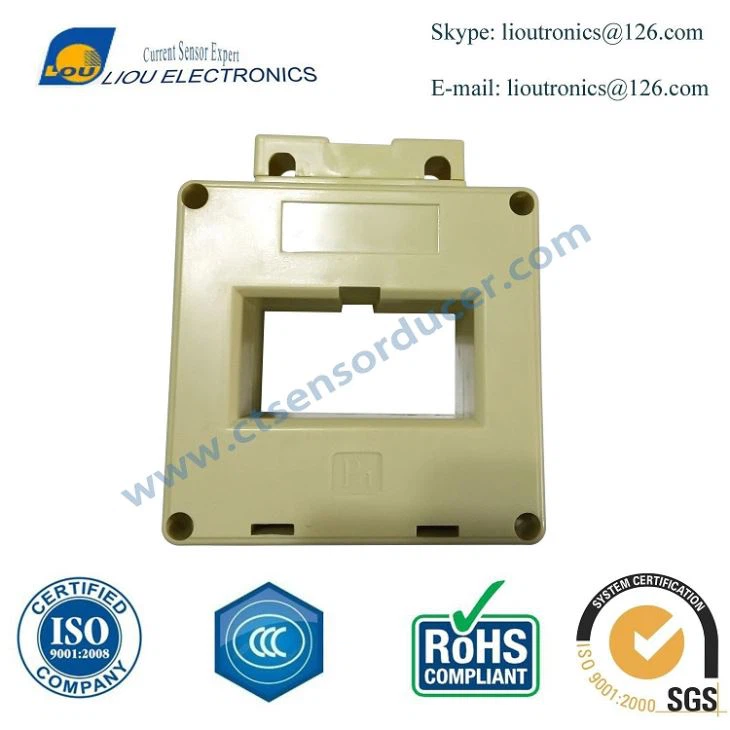
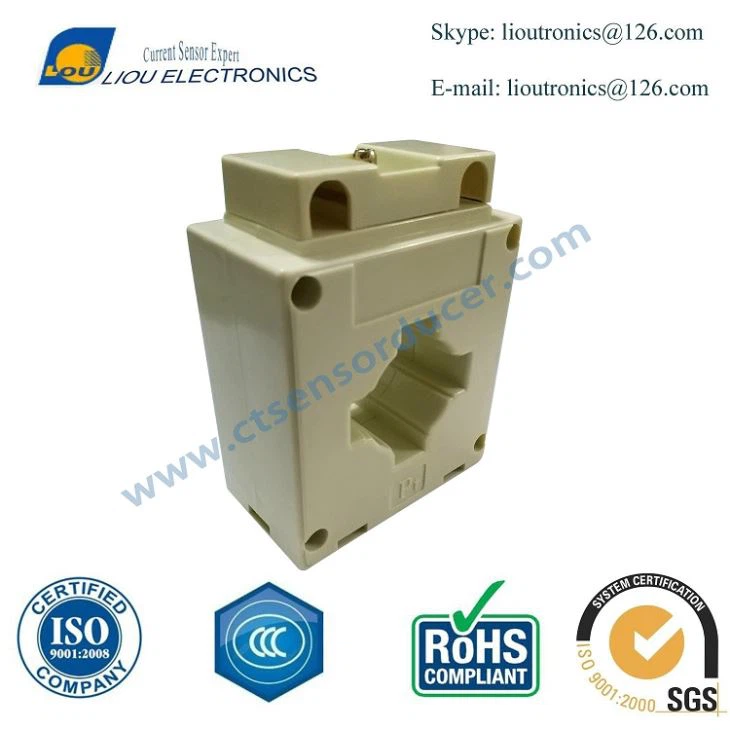
Wait, but don't just look at the big models. Check if they have consistent quality across their entire lineup. I've seen manufacturers that nail their high-end CTs but botch the smaller ones-like a 60A unit that's 2% off instead of the claimed 0.5% accuracy. That's why the 200A: 5A Center Through CT (wait, no, that's another one) actually matters-it's a middle ground that lets you test if their smaller units hold up to their claims, not just their flashy big-ticket items. If a manufacturer's smaller CTs are unreliable, their bigger ones probably aren't much better.
Next up: precision and testing, not just marketing claims. This is where a lot of suppliers lie. They'll list "1% accuracy" but that's at only one current point, like 100% of their rated load. What about 50% or 10%? A good manufacturer will test their CTs across the entire current range to make sure they're consistent. I once had a buyer come to me with a CT from another brand that read great at full load but was off by 8% at 20% load-totally useless for monitoring small power draws. Ask the manufacturer for their testing data, specifically at different current loads, temperature ranges, and for linearity (meaning the output matches the input, no weird spikes or drops). The Electrical Precision Current Transformer we make, for example, is tested at 25°C, -10°C, and 50°C, and checked every 10% of its rated current-no surprises when you install it out in the field.
Then there's build quality and durability, which you can't always see on a website. Center through CTs have that hole you run the power cable through-if the core is poorly aligned or the insulation is thin, that cable can rub against the core over time, causing shorts or accuracy loss. Ask the manufacturer about their core material (we use high-permeability nanocrystalline for most models, but some use cheaper iron that gets magnetically saturated at high currents) and insulation rating. Look for units with sealed enclosures if they're going outdoors or in dusty, high-humidity places. Another thing: the center hole size. If you need to run a thick 400A cable through, a manufacturer that makes a CT with a properly sized, centered hole is way better than one that cuts corners with a too-small hole that forces you to bend the cable-bad news for safety and accuracy.
Customization is huge too, especially if you're not working with a standard setup. A lot of manufacturers only sell off-the-shelf CTs, but if you need a different output ratio, a specific mounting bracket, or a unit that fits a tight space, you need someone who's willing to adjust their design. I've had clients who needed a CT that fit inside a small control panel, so we tweaked the 200A: 5A Center Through Current Sensor Lo-Mc30I to shave 1mm off the enclosure-no loss in performance, just a better fit. If a manufacturer says "we don't do custom," that's a red flag, especially if your application is even a little non-standard.
Warranty and support are also make-or-break. A manufacturer that stands behind their product will offer at least a 2-year warranty-anything less is a sign they don't expect their CTs to last. But even the best warranty is useless if the support team can't answer your questions. I've talked to buyers who waited weeks for a reply from another manufacturer's support, only to get a generic email that didn't solve their problem. When you're vetting a manufacturer, test their support: send them a quick question about their CT specs, see how fast and detailed their reply is. If they dodge the question or give a vague answer, move on. We have a support team that can walk you through installation, answer accuracy questions, or help you pick the right model for your application within a day-no runaround.
Don't sleep on certifications either. Depending on where you're using the CT, you might need IEC, UL, or CE certifications for safety and compliance. If you're selling equipment in the US, for example, UL certification is non-negotiable for most industrial applications. Ask the manufacturer to provide copies of their certifications for their CT models-if they can't, that's a big no. The 5000A: 1A High Current Transformer Lo-Mc120II, for instance, has UL 61010 certification, so it's safe for use in industrial environments across North America.
Another tip: check real user reviews or case studies, not just the ones the manufacturer posts on their website. A lot of companies only show positive testimonials, so look for third-party reviews, or ask the manufacturer for references from clients in your industry. If you're in agriculture, ask for a reference that uses CTs for pump monitoring; if you're in HVAC, ask for one for load monitoring on air handlers. A manufacturer that works with similar applications will know the specific challenges you face-like CTs getting exposed to vibration in factory floors, or needing to work with long cable runs for remote sensors.
Also, be wary of prices that are way too low. Yes, we all want a good deal, but if a CT is 30% cheaper than every other option, there's a reason. They're probably using cheap core material, skipping testing, or skimping on insulation. I once sold a client a "budget" CT that failed after 3 months because the insulation melted at high currents-cost them thousands in downtime and repairs. The slightly more expensive, well-built CT that lasts 5 years is way cheaper in the long run.
Wait, let's circle back to product range to make sure you're not limiting yourself. A good manufacturer should have options for every common current range, from tiny 5A residential models up to 5000A heavy-duty industrial units. That way, if your needs change down the line, you don't have to switch to a new manufacturer. Our lineup includes everything from the compact 60A: 5A Current Transformer Lo-Mc30I for small loads to the high-current Electrical Precision Current Transformer for demanding applications, so we can support you from your first unit to your thousandth.
At the end of the day, picking a center throughcurrent transformer manufacturer is about finding a partner, not just a vendor. You want someone who gets what you're building, knows how to make a reliable, accurate CT, and has your back if something goes wrong. If you're tired of dealing with suppliers that overpromise and underdeliver, or need help picking the right CT for your application, feel free to reach out to our team. We can walk you through our models, answer any questions, and even help you test if a unit fits your specific setup. Don't waste time or money on a bad CT-get one that works for your needs, not just their marketing.