




How to select the appropriate secondary burden for split core current transformers?
 Oct 02, 2026|
 How to Select the Appropriate Secondary Burden for Split Core Current Transformers
As a supplier of split core current transformers, I understand the crucial role that secondary burden plays in the performance and accuracy of these devices. In this blog post, I'll share some insights on how to select the appropriate secondary burden for split core current transformers, ensuring optimal performance in various applications.
Understanding Secondary Burden
Before delving into the selection process, it's essential to understand what secondary burden is. In a current transformer, the secondary burden refers to the impedance connected to the secondary winding. This impedance can include the burden of the measuring instruments (such as ammeters, wattmeters), the impedance of the connecting leads, and any other loads connected to the secondary circuit.
The secondary burden affects the accuracy of the current transformer. If the secondary burden is too high, the current transformer may saturate, leading to inaccurate measurements. On the other hand, if the secondary burden is too low, the current transformer may not operate within its designed range, also resulting in measurement errors.

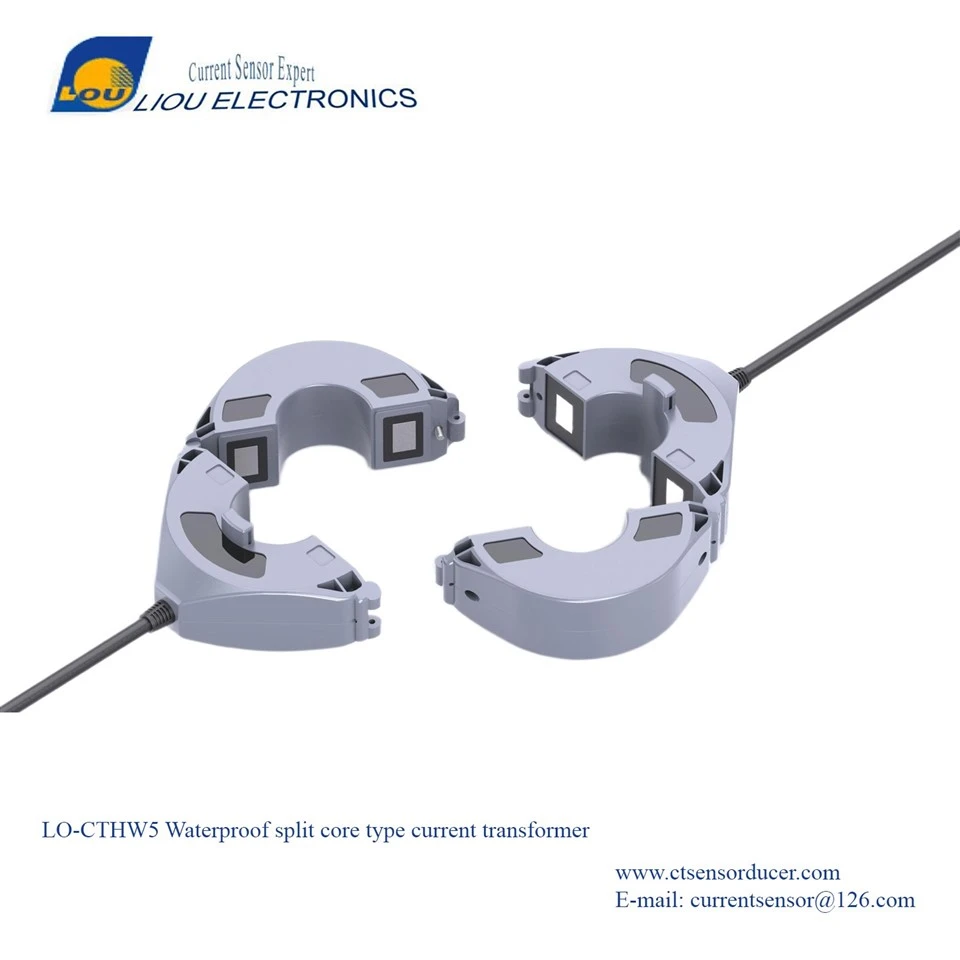
Factors to Consider When Selecting Secondary Burden
- Application Requirements: The first step in selecting the appropriate secondary burden is to consider the specific application requirements. For example, in high - precision metering applications, a lower secondary burden is often required to ensure accurate measurement. In contrast, in some control or protection applications, a slightly higher secondary burden may be acceptable.
- Accuracy Class: Each split core current transformer is designed with a specific accuracy class. The accuracy class indicates the maximum allowable error in current measurement. To maintain the specified accuracy class, the secondary burden must be within the range recommended by the manufacturer. For instance, a high - accuracy class transformer may require a very low secondary burden to achieve its stated accuracy.
- Range of Load Current: The range of load current that the current transformer is expected to measure also influences the selection of the secondary burden. If the load current varies widely, a secondary burden that can accommodate this variation without causing saturation or excessive measurement errors should be chosen.
Calculating the Secondary Burden
The secondary burden can be calculated using the following formula:
[Z_{b}=\frac{V_{s}}{I_{s}}]
where (Z_{b}) is the secondary burden impedance, (V_{s}) is the voltage across the secondary burden, and (I_{s}) is the secondary current.
In practical applications, the secondary burden of measuring instruments is usually specified by the manufacturer. The impedance of the connecting leads can be calculated based on their length, cross - sectional area, and the resistivity of the conductor material.
Recommended Secondary Burden for Different Types of Split Core Current Transformers
- Open Split Core Current Transformer: This type of transformer is widely used in applications where easy installation and removal are required. For an Open Split Core Current Transformer, the secondary burden should be carefully selected to ensure accurate measurement in a variety of electrical environments. A typical secondary burden for open split core current transformers used in general metering applications may range from 0.5 to 10 ohms.
- Clamp CT Split Core Current Transformer: Clamp CTs are convenient for taking current measurements without breaking the circuit. For a Clamp CT Split Core Current Transformer, a lower secondary burden is often preferred to minimize measurement errors. A secondary burden in the range of 0.1 to 5 ohms is commonly used for clamp CTs in precision measurement applications.
- High - Accuracy Split - Core Transformer For Industrial Automation Systems LO - CTKDP1: This high - precision transformer is designed for industrial automation applications where accurate current measurement is critical. The High - Accuracy Split - Core Transformer For Industrial Automation Systems LO - CTKDP1 requires a very low secondary burden, typically in the range of 0.1 to 2 ohms, to maintain its high accuracy class.
- Outdoor Split Core Current Transformer For Smart Grid Applications LO - CTHW7: Outdoor transformers need to withstand harsh environmental conditions. The Outdoor Split Core Current Transformer For Smart Grid Applications LO - CTHW7 should be selected with a secondary burden that can ensure stable performance in outdoor settings. A secondary burden of 1 to 5 ohms may be suitable for this type of transformer in smart grid applications.
- Split - Core Current Sensor For Machine Power Diagnostics LO - BHK: For machine power diagnostics, accurate current measurement is essential to detect any potential issues. The Split - Core Current Sensor For Machine Power Diagnostics LO - BHK requires a secondary burden that can provide reliable measurement results. A secondary burden in the range of 0.2 to 3 ohms is often recommended for this application.
Testing and Verification
After selecting the secondary burden, it's important to test and verify the performance of the split core current transformer. This can be done using a calibrated test set. The test should measure the accuracy of the current transformer under different load conditions and compare the results with the specified accuracy class.
Conclusion
Selecting the appropriate secondary burden for split core current transformers is a critical step in ensuring accurate and reliable current measurement. By considering the application requirements, accuracy class, and range of load current, and calculating the secondary burden correctly, you can optimize the performance of the split core current transformer.
If you are in the market for split core current transformers or need further assistance in selecting the appropriate secondary burden for your specific application, please feel free to contact us. We are dedicated to providing high - quality products and professional technical support to meet your needs.