




What are the limitations of using a Precision Current Transformer for DC current measurement?
 Jul 18, 2026|
 As a supplier of Precision Current Transformers, I've had my fair share of conversations with customers about using these nifty devices for DC current measurement. While they're super useful in many applications, they do come with some limitations. Let's dive into what those are.
1. The Basics of Precision Current Transformers
Before we get into the limitations, let's quickly go over how Precision Current Transformers work. These transformers are designed to measure current accurately. They work on the principle of electromagnetic induction, which is great for AC current. But when it comes to DC current, things get a bit tricky.
In an AC system, the changing magnetic field created by the alternating current induces a voltage in the secondary winding of the transformer. This induced voltage is proportional to the primary current, allowing us to measure it. But DC current is constant, so there's no changing magnetic field to induce that voltage.
2. Limited Response to DC Current
The biggest limitation of using a Precision Current Transformer for DC current measurement is its limited response. Since DC current doesn't produce a changing magnetic field, the transformer can't use the principle of electromagnetic induction to measure it.
For example, if you're trying to measure a steady DC current, the transformer won't be able to generate an output signal that accurately represents the current. This is because the magnetic core of the transformer needs a changing magnetic field to operate effectively. Without that change, the transformer simply won't work as intended.
3. Core Saturation
Another issue with using Precision Current Transformers for DC current measurement is core saturation. When a DC current flows through the primary winding of the transformer, it creates a constant magnetic field in the core. If this magnetic field is strong enough, it can saturate the core.
Core saturation means that the magnetic core can no longer increase its magnetic flux in response to an increase in the current. When this happens, the transformer's output becomes distorted, and it can no longer accurately measure the current. This is a major problem, especially in applications where accurate current measurement is crucial.
4. Temperature Effects
Temperature can also have a significant impact on the performance of Precision Current Transformers when measuring DC current. Changes in temperature can cause the resistance of the windings to change, which can affect the accuracy of the measurement.
For instance, if the temperature increases, the resistance of the windings will also increase. This can lead to a decrease in the output voltage of the transformer, resulting in an inaccurate measurement of the DC current. Additionally, temperature changes can also affect the magnetic properties of the core, further reducing the accuracy of the measurement.
5. Frequency Response
Precision Current Transformers are designed to work within a specific frequency range. Most of them are optimized for AC current measurement, which means they have a limited frequency response for DC current.
Since DC current has a frequency of 0 Hz, the transformer may not be able to accurately measure it. The transformer's response to DC current may be slow or inaccurate, depending on its design and specifications. This can make it difficult to use the transformer for DC current measurement in applications where high accuracy is required.
6. Cost and Complexity
Using a Precision Current Transformer for DC current measurement can also be costly and complex. In order to measure DC current accurately, additional components and circuitry may be required.
For example, some transformers may need a DC bias circuit to compensate for the lack of a changing magnetic field. This adds to the cost and complexity of the measurement system. Additionally, the calibration and maintenance of these transformers can be more difficult and expensive compared to using other methods for DC current measurement.

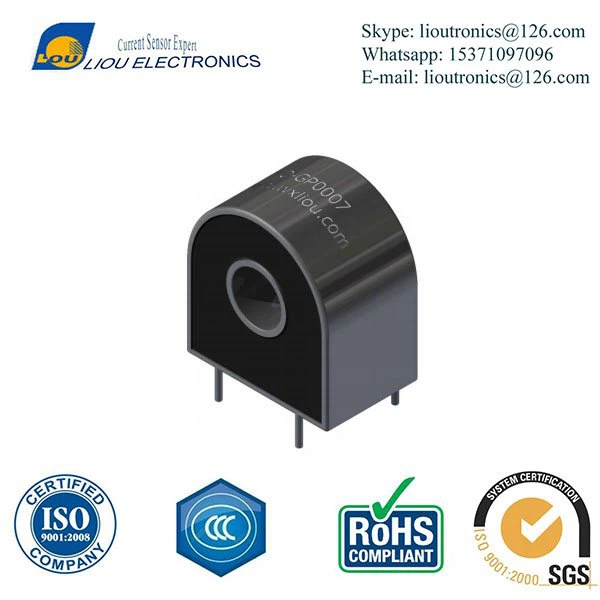
Our Product Offerings
Despite these limitations, we offer a range of Precision Current Transformers that are suitable for various applications. For example, our High Accuracy Current Transformer 6: 1500 4A Input is designed to provide accurate current measurement in high-precision applications. It has a high accuracy rating and is suitable for both AC and some limited DC applications.
We also have the 1:1000 25A Input Small Volume Current Transformer, which is a compact and efficient option for measuring current. It's ideal for applications where space is limited.
And if you're looking for high-frequency applications, our High Frequency Output Transformers are a great choice. They're designed to provide accurate current measurement at high frequencies.
Conclusion
In conclusion, while Precision Current Transformers are great for many applications, they do have some limitations when it comes to DC current measurement. These limitations include limited response to DC current, core saturation, temperature effects, frequency response, and cost and complexity.
However, with the right product selection and proper application, these transformers can still be used effectively for DC current measurement in some cases. If you're interested in learning more about our Precision Current Transformers or have any questions about using them for DC current measurement, feel free to contact us for a procurement discussion. We're here to help you find the best solution for your needs.