




What is the power consumption of a Split Core Current Transducer?
 Oct 30, 2025|
What is the power consumption of a Split Core Current Transducer?
As a supplier of Split Core Current Transducers, I often encounter inquiries about the power consumption of these devices. Understanding the power consumption of a Split Core Current Transducer is crucial for various applications, from industrial monitoring to energy management systems. In this blog post, I will delve into the factors that influence the power consumption of Split Core Current Transducers and provide insights into how to optimize their energy usage.
How Split Core Current Transducers Work
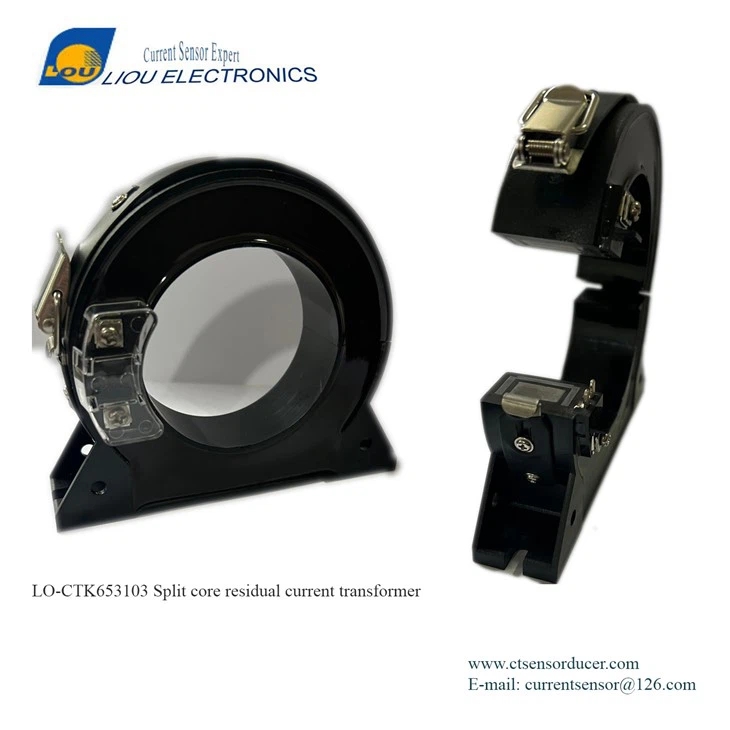
Before discussing power consumption, it's essential to understand how Split Core Current Transducers operate. A Split Core Current Transducer is a type of current transformer designed to measure alternating current (AC) in a conductor. Unlike traditional current transformers, which require the conductor to be disconnected for installation, split core current transducers can be easily clamped around the conductor without interrupting the circuit.
The basic principle behind a Split Core Current Transducer is electromagnetic induction. When an AC current flows through the conductor, it creates a magnetic field around it. The split core of the transducer is designed to capture this magnetic field and induce a proportional current in the secondary winding of the transformer. This secondary current is then measured and used to determine the primary current flowing through the conductor.

Factors Affecting Power Consumption
Several factors can influence the power consumption of a Split Core Current Transducer. These include:
- Core Material: The type of core material used in the transducer can significantly impact its power consumption. Different core materials have varying levels of magnetic permeability and hysteresis losses. For example, ferrite cores are known for their low hysteresis losses and high magnetic permeability, making them an energy - efficient choice for Split Core Current Transducers.
- Load Resistance: The load resistance connected to the secondary winding of the transducer affects its power consumption. A higher load resistance can result in lower power consumption, as less current is drawn from the secondary winding. However, it's important to ensure that the load resistance is within the specified range of the transducer to maintain accurate measurements.
- Primary Current Level: The magnitude of the primary current flowing through the conductor also plays a role in the power consumption of the transducer. As the primary current increases, the magnetic field strength around the conductor increases, which in turn induces a higher current in the secondary winding. This can lead to increased power consumption in the transducer.
- Operating Frequency: The operating frequency of the AC current being measured can affect the power consumption of the Split Core Current Transducer. Transducers are typically designed to operate within a specific frequency range, and operating outside this range can result in increased power losses due to factors such as eddy currents and hysteresis.
Measuring Power Consumption
Measuring the power consumption of a Split Core Current Transducer can be done using a power meter. The power meter is connected to the secondary winding of the transducer, and the power consumption is measured in watts. It's important to note that the power consumption of the transducer is typically very low, usually in the range of milliwatts to a few watts.
When measuring power consumption, it's also important to consider the accuracy of the measurement. The power meter should have a high level of accuracy to ensure that the measured power consumption is reliable. Additionally, the measurement should be taken under normal operating conditions to obtain an accurate representation of the transducer's power consumption.
Optimizing Power Consumption
As a supplier, we understand the importance of optimizing the power consumption of our Split Core Current Transducers. Here are some tips to help reduce power consumption:
- Choose the Right Core Material: Select a transducer with a core material that has low hysteresis losses and high magnetic permeability. Ferrite cores are often a good choice for applications where energy efficiency is a priority.
- Properly Size the Load Resistance: Ensure that the load resistance connected to the secondary winding of the transducer is within the specified range. This will help to minimize power consumption while maintaining accurate measurements.
- Match the Transducer to the Application: Select a Split Core Current Transducer that is suitable for the specific application. Consider factors such as the primary current level, operating frequency, and accuracy requirements when choosing a transducer.
Our Product Range
We offer a wide range of Split Core Current Transducers to meet the diverse needs of our customers. Some of our popular products include:
- High Precision Split Core Residual Current Transformer RCT: This transducer is designed for high - precision measurement of residual current. It features a split core design for easy installation and offers excellent accuracy and reliability.
- Low Voltage Split Core Current Transformer: Ideal for low - voltage applications, this transducer provides accurate current measurement with low power consumption. Its compact design makes it suitable for use in space - constrained environments.
- Single Phase Split Core CT: This single - phase transducer is designed for measuring AC current in single - phase circuits. It offers high accuracy and is easy to install, making it a popular choice for residential and commercial applications.
Contact for Purchase and Discussion
If you are interested in learning more about our Split Core Current Transducers or have specific requirements for your application, we encourage you to contact us. Our team of experts is ready to assist you in selecting the right transducer for your needs and can provide detailed information about power consumption and other technical specifications. Whether you are looking to optimize energy usage in your industrial facility or need accurate current measurements for a small - scale project, we have the solutions you need.
References
- Grover, F. W. (1946). Inductance Calculations: Working Formulas and Tables. Dover Publications.
- Chapman, S. J. (2012). Electric Machinery Fundamentals. McGraw - Hill Education.