




What is the saturation characteristic of a Center Throughcurrent Transformer?
 Jan 15, 2026|
 The saturation characteristic of a Center Throughcurrent Transformer (CT) is a crucial aspect that significantly impacts its performance and application in electrical systems. As a supplier of Center Throughcurrent Transformers, I have witnessed firsthand the importance of understanding these characteristics for ensuring the proper functioning of various electrical installations.
Basics of Center Throughcurrent Transformers
A Center Throughcurrent Transformer is a type of current transformer designed to measure alternating current (AC) by using the principle of electromagnetic induction. It consists of a primary winding, which is typically a single conductor passing through the center of a toroidal core, and a secondary winding wound around the core. When an AC current flows through the primary conductor, it creates a magnetic field in the core, which in turn induces a current in the secondary winding. The ratio of the primary current to the secondary current is determined by the turns ratio of the transformer.
Understanding Saturation in CTs
Saturation in a Center Throughcurrent Transformer occurs when the magnetic core of the transformer reaches its maximum magnetic flux density. At this point, the magnetic field in the core can no longer increase proportionally with the increase in the primary current. As a result, the secondary current no longer accurately represents the primary current, leading to distorted measurements and potential malfunction of the connected protection and control devices.
There are several factors that can contribute to the saturation of a CT. One of the main factors is the magnitude of the primary current. If the primary current exceeds the rated current of the CT, the magnetic core may saturate. This can happen during short - circuit conditions, where the current can be several times higher than the normal operating current.
Another factor is the characteristics of the magnetic core material. Different core materials have different saturation levels. For example, some ferromagnetic materials used in CT cores have a relatively low saturation flux density, which makes them more prone to saturation. The shape and size of the core also play a role. A smaller core may saturate more easily than a larger one, as it has a limited capacity to store magnetic flux.
Effects of Saturation
The saturation of a Center Throughcurrent Transformer can have several negative effects on the electrical system. Firstly, it can lead to inaccurate current measurements. In a protection system, inaccurate current measurements can cause the protective relays to malfunction. For instance, if a CT saturates during a short - circuit, the relay may not detect the fault correctly, leading to a delay in tripping the circuit breaker and potentially causing damage to the electrical equipment.
Secondly, saturation can cause distortion of the secondary current waveform. The distorted waveform can contain high - frequency harmonics, which can interfere with the operation of other sensitive equipment in the system. This can lead to communication errors, false alarms, and other operational problems.
Detecting and Preventing Saturation
Detecting saturation in a Center Throughcurrent Transformer can be challenging. One way is to monitor the secondary current waveform. If the waveform shows signs of distortion, such as flat - topping or clipping, it may indicate that the CT is saturated. Advanced monitoring systems can also be used to analyze the characteristics of the secondary current and detect saturation in real - time.
To prevent saturation, it is essential to select the right CT for the application. When choosing a CT, the maximum expected primary current should be considered. A CT with a higher rated current can handle larger currents without saturating. Additionally, using a CT with a core material that has a high saturation flux density can also help reduce the risk of saturation.
Applications and Solutions in Our Product Range
As a supplier of Center Throughcurrent Transformers, we offer a wide range of products to meet different application requirements. Our Electrical Precision Current Transformer is designed for applications where high - precision current measurement is required. It uses high - quality core materials and advanced manufacturing techniques to minimize the risk of saturation and ensure accurate measurements.
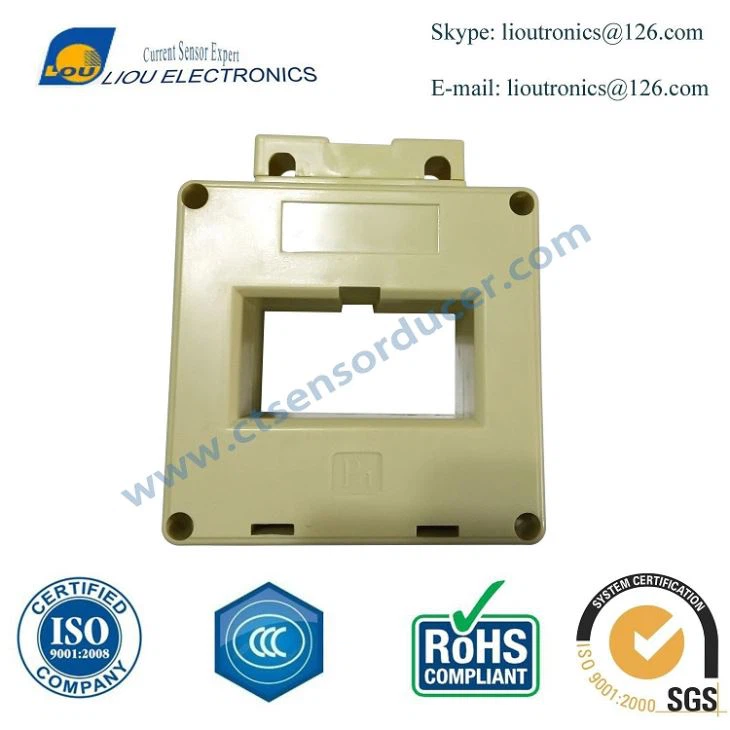
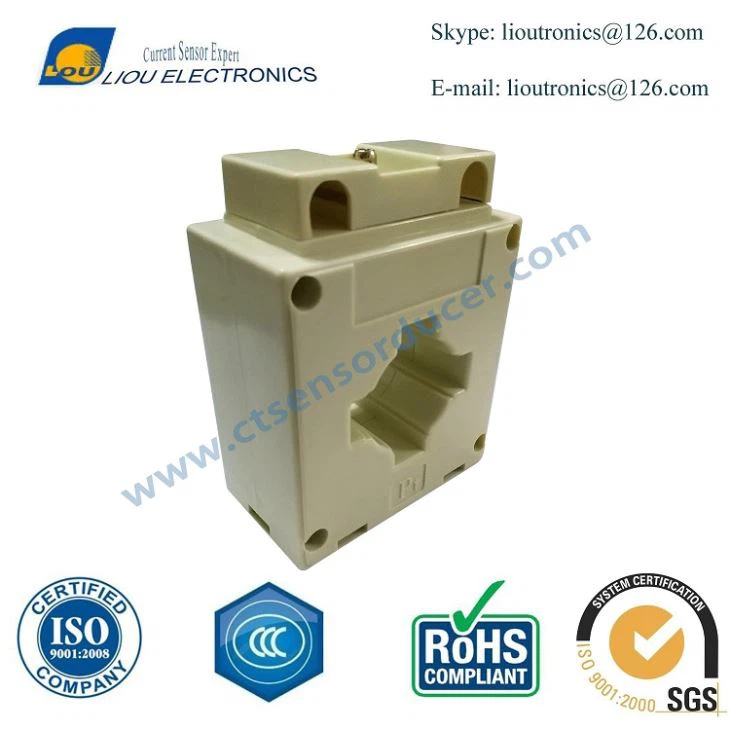
For applications with relatively lower currents, our 60A: 5A Current Transformer Lo - Mc30I is a great choice. It is compact and cost - effective, yet provides reliable performance. On the other hand, for high - current applications, our 5000A: 1A High Current Transformer Lo - Mc120II is specifically designed to handle large currents without saturating. It is suitable for use in power substations, industrial plants, and other high - power applications.
Importance of Collaboration
Understanding the saturation characteristic of a Center Throughcurrent Transformer is not only important for the proper functioning of the electrical system but also for ensuring the safety and reliability of the entire infrastructure. As a supplier, we are committed to providing our customers with the best - in - class products and technical support.
We work closely with our customers to understand their specific needs and challenges. Whether it is selecting the right CT for a new project or troubleshooting an existing system, our team of experts is always ready to assist. We believe that by collaborating with our customers, we can help them optimize their electrical systems and avoid the problems associated with CT saturation.
Conclusion
In conclusion, the saturation characteristic of a Center Throughcurrent Transformer is a complex but essential topic in the field of electrical engineering. It is crucial for engineers, technicians, and system operators to have a thorough understanding of this phenomenon to ensure the accurate measurement of current and the proper operation of protection and control devices.
As a supplier of Center Throughcurrent Transformers, we are dedicated to providing high - quality products that are designed to minimize the risk of saturation. Our product range, including the Electrical Precision Current Transformer, 60A: 5A Current Transformer Lo - Mc30I, and 5000A: 1A High Current Transformer Lo - Mc120II, offers solutions for a wide range of applications.
If you are in need of a reliable Center Throughcurrent Transformer or have any questions regarding saturation and its effects, we encourage you to contact us for a detailed discussion. Our team is eager to work with you to find the best solution for your electrical system.
References
- Grover, F. W. (1946). Inductance Calculations: Working Formulas and Tables. Dover Publications.
- Westinghouse Electric Corporation. (1964). Electrical Transmission and Distribution Reference Book. Westinghouse Electric Corporation.
- IEEE Standard C57.13 - 2016, Standard Requirements for Instrument Transformers.