




What is the self - resonance frequency of Planar Transformer?
 Dec 05, 2025|
 Hey there! As a supplier of Planar Transformers, I often get asked about various technical aspects of these nifty devices. One question that pops up quite frequently is, "What is the self - resonance frequency of Planar Transformers?" Let's dive right in and break it down.
Understanding Planar Transformers
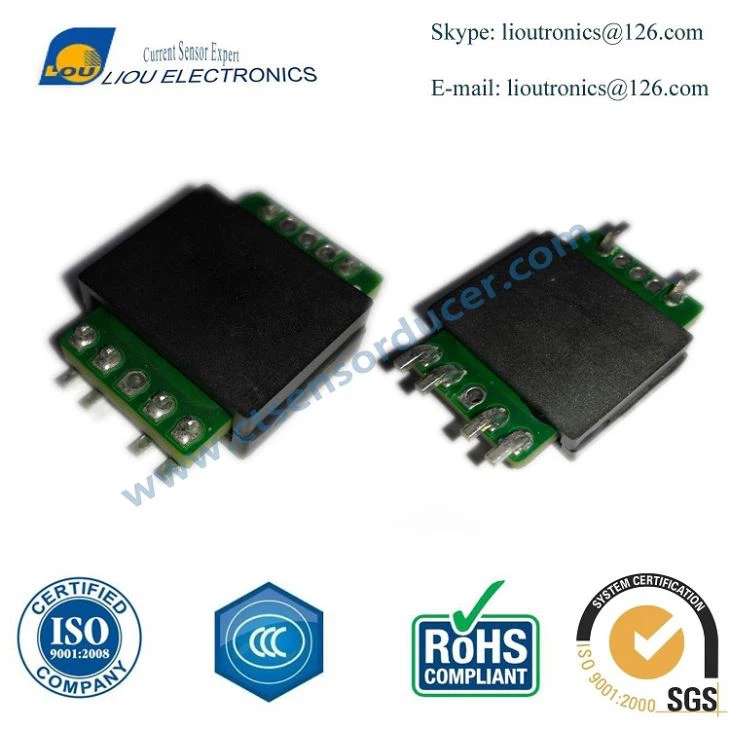
First things first, let's briefly go over what Planar Transformers are. Unlike traditional transformers that use wound coils on a core, Planar Transformers utilize printed circuit board (PCB) technology. This means that the windings are etched directly onto the PCB layers. The result? A more compact, lightweight, and efficient transformer, which is great for a whole bunch of applications like power supplies, inverters, and high - frequency circuits.
What is Self - Resonance Frequency?
The self - resonance frequency of a Planar Transformer is the frequency at which the inductance and capacitance within the transformer create a resonant circuit. In simpler terms, it's the frequency where the electrical energy stored in the magnetic field of the inductor (windings) and the electrical energy stored in the electric field of the capacitor (parasitic capacitance between windings) exchange back and forth at maximum efficiency.
When a Planar Transformer operates at its self - resonance frequency, it can lead to some interesting effects. For example, the impedance of the transformer can change significantly. At resonance, the impedance is at a minimum, which means that the transformer can transfer energy more easily. However, if the operating frequency gets too close to the self - resonance frequency, it can also cause issues like excessive voltage spikes and increased losses.
Factors Affecting Self - Resonance Frequency
There are several factors that can influence the self - resonance frequency of a Planar Transformer.
1. Winding Geometry
The way the windings are arranged on the PCB plays a huge role. The number of turns, the spacing between turns, and the layer stacking all affect the inductance and capacitance values. For instance, if the turns are closer together, the parasitic capacitance between them will increase. This, in turn, will lower the self - resonance frequency.

2. Core Material
The core material of the Planar Transformer also matters. Different core materials have different magnetic properties, which can affect the inductance. A core with a high permeability will increase the inductance, which can shift the self - resonance frequency to a lower value.
3. Parasitic Capacitance
As mentioned earlier, parasitic capacitance is a key factor. It can come from various sources, such as the capacitance between adjacent turns, between different layers of the PCB, and between the windings and the core. Minimizing parasitic capacitance is often a goal in Planar Transformer design to increase the self - resonance frequency.
Measuring Self - Resonance Frequency
So, how do you measure the self - resonance frequency of a Planar Transformer? One common method is to use a network analyzer. This device can measure the impedance of the transformer over a range of frequencies. By looking for the frequency at which the impedance is at a minimum, you can determine the self - resonance frequency.
Another way is to use a simple LC resonance test setup. You can connect the transformer to a variable frequency signal generator and a load resistor. Then, by adjusting the frequency of the signal generator and measuring the voltage across the load resistor, you can find the frequency at which the voltage is at a maximum, which corresponds to the self - resonance frequency.
Importance in Applications
Understanding the self - resonance frequency of Planar Transformers is crucial in many applications. For example, in high - frequency power supplies, operating the transformer close to its self - resonance frequency can improve efficiency. However, it also requires careful design and control to avoid issues like overheating and component failure.
In communication systems, the self - resonance frequency can affect the performance of the transformer in terms of signal transmission and filtering. By designing the transformer with a specific self - resonance frequency, you can optimize its performance for a particular frequency band.
Our Product Range
At our company, we offer a wide range of Planar Transformers to meet different needs. For example, the UYF26 16KV High Voltage High Frequency Transformer is designed for high - voltage and high - frequency applications. It has been carefully engineered to have a suitable self - resonance frequency for its intended use.
Another great product is the Planar Transformer 28.2V Lo - Plt8088 - 008. This transformer is ideal for low - voltage applications where size and efficiency are important. We've optimized its design to ensure a stable self - resonance frequency within the operating range.
And if you're looking for a transformer for forward topology applications, our Planar Transformer forward Topology 100W is a great choice. It offers reliable performance with a well - defined self - resonance frequency.
Conclusion
In conclusion, the self - resonance frequency of Planar Transformers is a critical parameter that can significantly impact their performance. By understanding the factors that affect it and how to measure it, you can make more informed decisions when selecting and designing Planar Transformers for your applications.
If you're in the market for high - quality Planar Transformers or have any questions about self - resonance frequency or our products, don't hesitate to reach out. We're here to help you find the perfect solution for your needs. Let's start a conversation and see how we can work together!
References
- "High - Frequency Power Electronics Design and Applications" by Ned Mohan
- "Planar Transformers: Theory, Design, and Applications" by John C. Ferreira