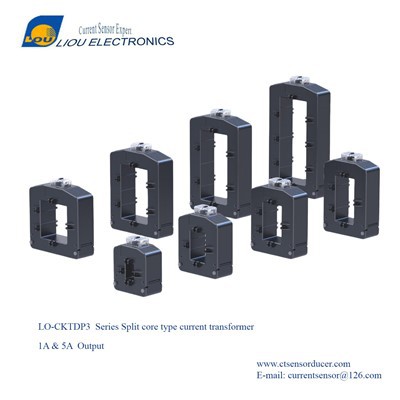
Emergency Handling of an Open Circuit on the Secondary Side of a Current Transformer
 May 06, 2026|
 The core of emergency handling after an open circuit on the secondary side of a current transformer is to immediately take safety measures, prioritizing short-circuiting the secondary side to eliminate the risk of high voltage. If immediate power outage is not possible, live short-circuiting must be performed under proper protective measures.
Emergency Handling Steps
1. Identify the Fault Symptoms
Ammeter and energy meter readings are zero or fluctuating violently.
Hearing a "buzzing" or "sizzling" discharge sound from the transformer.
Smelling a burning odor, or observing sparks or smoke at the terminal blocks.
2. Immediately Report and Request Power Outage (Preferred Solution)
Report to the on-duty supervisor or dispatcher and quickly disconnect the primary power supply to eliminate the danger at its source. This is the safest approach, especially suitable for high-voltage systems.
3. If Live Handling is Necessary, Perform a Short-Circuit Operation
When immediate power outage is not possible, the following measures should be taken:
Wear insulating protective equipment: Wear insulating gloves and boots, use tools with insulated handles, and work while standing on an insulating mat. Reliable Short-Circuit of Secondary Side: Use a dedicated shorting clip or copper wire with a cross-section of not less than 2.5mm² to reliably short-circuit terminals S1-S2 at the terminal block or test terminal, ensuring good contact and avoiding arcing caused by loose connections.
Confirm Risk Elimination After Short-Circuit: After short-circuiting, the high voltage should disappear immediately, and you can proceed to the fault diagnosis stage.
4. Prohibited Dangerous Behaviors:
Do not touch the secondary terminals or wires directly with your hands.
Do not use a regular multimeter to measure open-circuit voltage.
Do not attempt to tighten loose terminals without short-circuiting.
5. Follow-up Handling:
After short-circuiting, arrange for a power outage as soon as possible to locate and repair the open circuit point (e.g., loose terminals, broken wires).
After repair, restore the secondary circuit connection first, then remove the shorting wire.
Check the current transformer for overheating or unusual odors; only after confirming it is normal can it be put back into operation.