




How to choose a Center Throughcurrent Transformer with high accuracy?
 Aug 11, 2026|
 When it comes to electrical systems and measurement, choosing the right center through current transformer with high accuracy is crucial. As a supplier of center through current transformers, I have witnessed firsthand the importance of making an informed decision. In this blog post, I will share some insights on how to choose a high - accuracy center through current transformer.
Understanding the Basics of Center Through Current Transformers
A center through current transformer (CT) is a device that measures alternating current (AC). It works on the principle of electromagnetic induction. The primary current passes through the center of the CT, and a secondary current is induced in the CT winding, which is proportional to the primary current. The ratio between the primary and secondary currents is known as the current ratio. For example, in a 60A: 5A Current Transformer Lo - Mc30I [/center - throughcurrent - transformer/60a - 5a - current - transformer - lo - mc30i.html], the primary current of 60A will result in a secondary current of 5A.
Accuracy Classes
One of the most important factors to consider when choosing a center through current transformer is its accuracy class. Accuracy classes define the maximum allowable error in the measurement of the current transformer. The lower the accuracy class number, the higher the accuracy of the CT. For instance, a CT with an accuracy class of 0.2 is more accurate than one with an accuracy class of 0.5.
The accuracy of a CT is affected by several factors, including the burden (the impedance connected to the secondary winding), the primary current magnitude, and the frequency of the AC current. When selecting a CT, you need to ensure that the accuracy class is suitable for your application. For example, in metering applications where precise billing is required, a high - accuracy CT with a class of 0.2 or better may be necessary. In general protection applications, a CT with a class of 5P or 10P may be sufficient.
Current Ratio Selection
The current ratio is another critical aspect. You need to choose a CT with a current ratio that matches your application. If the primary current is too high for the CT's rated primary current, the CT may saturate, leading to inaccurate measurements. On the other hand, if the primary current is much lower than the rated primary current, the measurement error may increase.
Let's say you are measuring the current in a circuit where the maximum expected current is 200A. In this case, a 200A: 5A Center Through Current Transformer [/center - throughcurrent - transformer/200a - 5a - center - through - current - transformer.html] may be a suitable choice. However, you should also consider future expansion. If there is a possibility of increasing the load in the circuit, you may want to choose a CT with a slightly higher current ratio to avoid the need for replacement in the future.
Burden Consideration
The burden of a CT refers to the impedance connected to the secondary winding. It can include the impedance of the measuring instrument (such as a meter or a relay) and the connecting wires. The burden affects the accuracy of the CT. If the burden is too high, the accuracy of the CT may deteriorate.
When selecting a CT, you need to ensure that the CT can handle the expected burden. Manufacturers usually specify the maximum allowable burden for each CT. For example, if you are using a high - impedance measuring instrument, you need to choose a CT with a higher maximum allowable burden.
Frequency Range
The frequency range of the AC current also plays a significant role in the performance of a CT. Most center through current transformers are designed to operate at a specific frequency, typically 50Hz or 60Hz. If the frequency of the current in your application deviates significantly from the rated frequency of the CT, the accuracy of the CT may be affected.
For applications where the frequency is variable, such as in some industrial drives or renewable energy systems, you need to choose a CT that can operate over a wide frequency range. Some high - end CTs are designed to operate from 20Hz to 1000Hz, providing more flexibility for different applications.
Environmental Conditions
The environmental conditions in which the CT will operate are also important. Factors such as temperature, humidity, and vibration can affect the performance and lifespan of the CT. For example, high temperatures can cause the insulation of the CT to degrade, leading to a decrease in accuracy and potentially causing a safety hazard.
If the CT is to be installed in a harsh environment, you need to choose a CT that is designed to withstand these conditions. Some CTs are equipped with special insulation materials and enclosures to protect them from moisture, dust, and extreme temperatures.

Size and Mounting
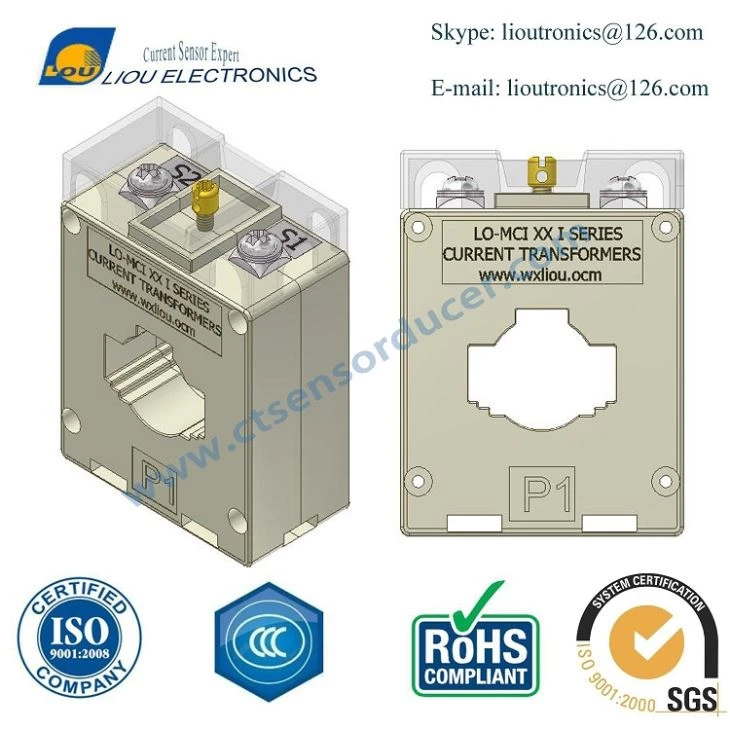
The physical size and mounting requirements of the CT are practical considerations. You need to ensure that the CT can fit into the available space in your electrical panel or equipment. Different CTs come in various sizes and shapes, and they may have different mounting options, such as DIN - rail mounting or panel - mounting.
For example, if you have limited space in your electrical panel, you may want to choose a compact CT. Additionally, the mounting method should be convenient for installation and maintenance.
Examples of High - Accuracy Center Through Current Transformers
We offer a range of high - accuracy center through current transformers. For instance, the 5000A: 1A High Current Transformer Lo - Mc120II [/center - throughcurrent - transformer/5000a - 1a - high - current - transformer - lo - mc120ii.html] is suitable for high - current applications. It provides accurate measurement even at very high currents. The Electrical Precision Current Transformer [/center - throughcurrent - transformer/electrical - precision - current - transformer.html] is designed for precision metering applications, offering a high level of accuracy. And the 200A: 5A Center Through CT Lo - Mc30I [/center - throughcurrent - transformer/200a - 5a - center - through - ct - lo - mc30i.html] is a popular choice for medium - current applications, providing reliable and accurate measurement.
Conclusion
Choosing a center through current transformer with high accuracy requires careful consideration of multiple factors, including accuracy classes, current ratio, burden, frequency range, environmental conditions, and physical size. By understanding these factors and matching them to your specific application requirements, you can select the most suitable CT.
If you are in the market for a high - accuracy center through current transformer, we are here to help. Our experienced team can assist you in choosing the right product for your needs. Whether you are working on a small - scale electrical project or a large - scale industrial installation, we have the expertise and the product range to meet your requirements. Contact us to start a discussion about your procurement needs and let us work together to find the perfect center through current transformer solution for you.