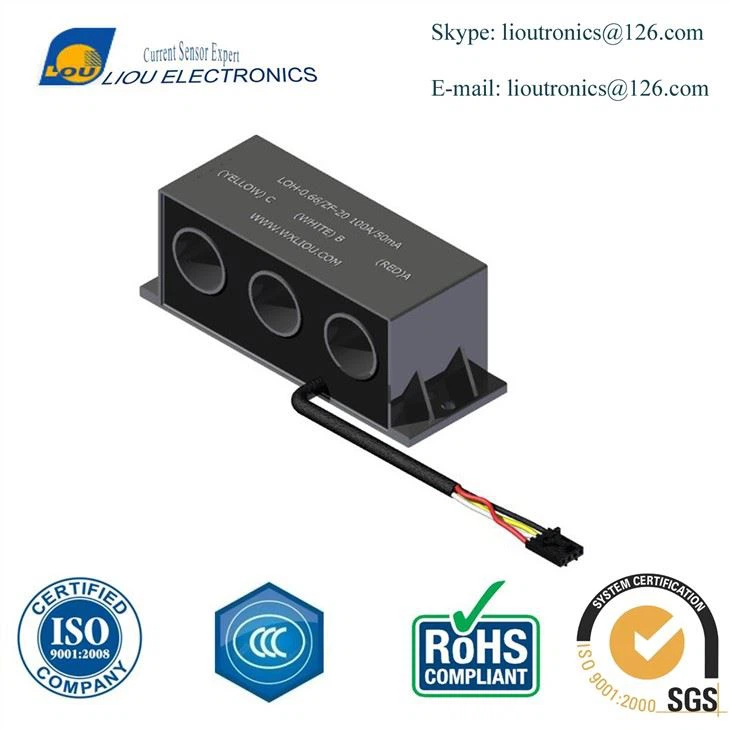
How to reduce the phase angle error of a Three Phase Current Transformer?
 May 15, 2026|
 As a supplier of Three Phase Current Transformers, I often get asked about how to reduce the phase angle error of these devices. It's a crucial aspect, especially for applications where accurate measurement and control are needed. In this blog, I'll share some practical tips and insights based on my experience in the industry.
Understanding Phase Angle Error in Three Phase Current Transformers
Before we dive into the solutions, let's quickly understand what phase angle error is. In a Three Phase Current Transformer, the phase angle error is the difference between the phase angle of the primary current and the phase angle of the secondary current. This error can occur due to various factors such as core characteristics, winding resistance, and leakage reactance.
A high phase angle error can lead to inaccurate measurement of power, energy, and other electrical parameters. This can be a big problem in industries like power generation, distribution, and industrial automation, where precise measurements are essential for efficient operation and safety.
Factors Affecting Phase Angle Error
Core Material and Design
The core of a current transformer plays a significant role in determining the phase angle error. The magnetic properties of the core material, like its permeability and hysteresis, can affect how the magnetic flux is transferred from the primary to the secondary winding. For example, a core with low permeability may cause a larger phase angle error because it's less efficient at transferring the magnetic field.
The design of the core also matters. A well-designed core with a proper shape and size can reduce the magnetic leakage and improve the coupling between the primary and secondary windings. This, in turn, can help in reducing the phase angle error.
Winding Resistance and Reactance
The resistance and reactance of the primary and secondary windings can also contribute to the phase angle error. Higher winding resistance can cause a voltage drop, which can affect the phase relationship between the primary and secondary currents. Similarly, leakage reactance can cause a phase shift between the currents.
To minimize these effects, it's important to use high-quality conductors with low resistance and design the windings to have low leakage reactance. This can be achieved through proper winding techniques and the use of suitable insulation materials.
Burden on the Secondary Winding
The burden on the secondary winding, which is the load connected to the secondary terminals of the current transformer, can also have an impact on the phase angle error. A heavy burden can cause a larger voltage drop across the secondary winding, leading to an increased phase angle error.
It's crucial to select the appropriate burden for the current transformer based on its rated capacity and the requirements of the application. Using a burden that is too large or too small can result in inaccurate measurements and increased phase angle error.
Strategies to Reduce Phase Angle Error
Selecting the Right Transformer
One of the most effective ways to reduce the phase angle error is to select a high-quality Three Phase Current Transformer. At our company, we offer a range of products, including the 1: 2000 High Precision Three Phase Current Transformer and the Three Phase Current Transformer 1: 2000. These transformers are designed with advanced technology and high-quality materials to minimize the phase angle error and provide accurate measurements.
When choosing a current transformer, consider factors like the accuracy class, rated current, and burden. A higher accuracy class generally indicates a lower phase angle error. Make sure to select a transformer that meets the specific requirements of your application.
Proper Installation and Wiring
The way you install and wire the current transformer can also affect the phase angle error. Ensure that the transformer is installed in a clean, dry, and well-ventilated environment. Avoid installing it near sources of heat, magnetic fields, or electrical interference.
Proper wiring is also crucial. Use high-quality cables with low resistance and capacitance. Make sure the connections are tight and secure to prevent any loose connections that could cause a voltage drop or a phase shift.
Regular Maintenance and Testing
Regular maintenance and testing of the current transformer can help in detecting and correcting any issues that may cause an increase in the phase angle error. Check the transformer for any signs of damage, such as cracks in the core or insulation, and replace any faulty components.
Perform periodic testing of the transformer to measure the phase angle error. Compare the measured values with the manufacturer's specifications to ensure that the transformer is operating within the acceptable range. If the phase angle error exceeds the specified limits, take appropriate measures to correct it.
Compensation Techniques
In some cases, compensation techniques can be used to reduce the phase angle error. For example, you can use a phase compensation circuit to adjust the phase relationship between the primary and secondary currents. This can be particularly useful in applications where a high degree of accuracy is required.
Another compensation technique is to use a digital signal processing (DSP) algorithm to correct the phase angle error. DSP algorithms can analyze the measured signals and apply appropriate corrections to compensate for the error.
Conclusion
Reducing the phase angle error of a Three Phase Current Transformer is essential for accurate measurement and control in electrical systems. By understanding the factors that affect the phase angle error and implementing the strategies mentioned above, you can minimize the error and ensure the reliable operation of your equipment.
If you're in the market for a high-quality Three Phase Current Transformer, we've got you covered. Check out our High Accuracy Three Phase Current Transformer and other products. If you have any questions or need further assistance, feel free to reach out to us for a procurement discussion. We're here to help you find the best solution for your needs.