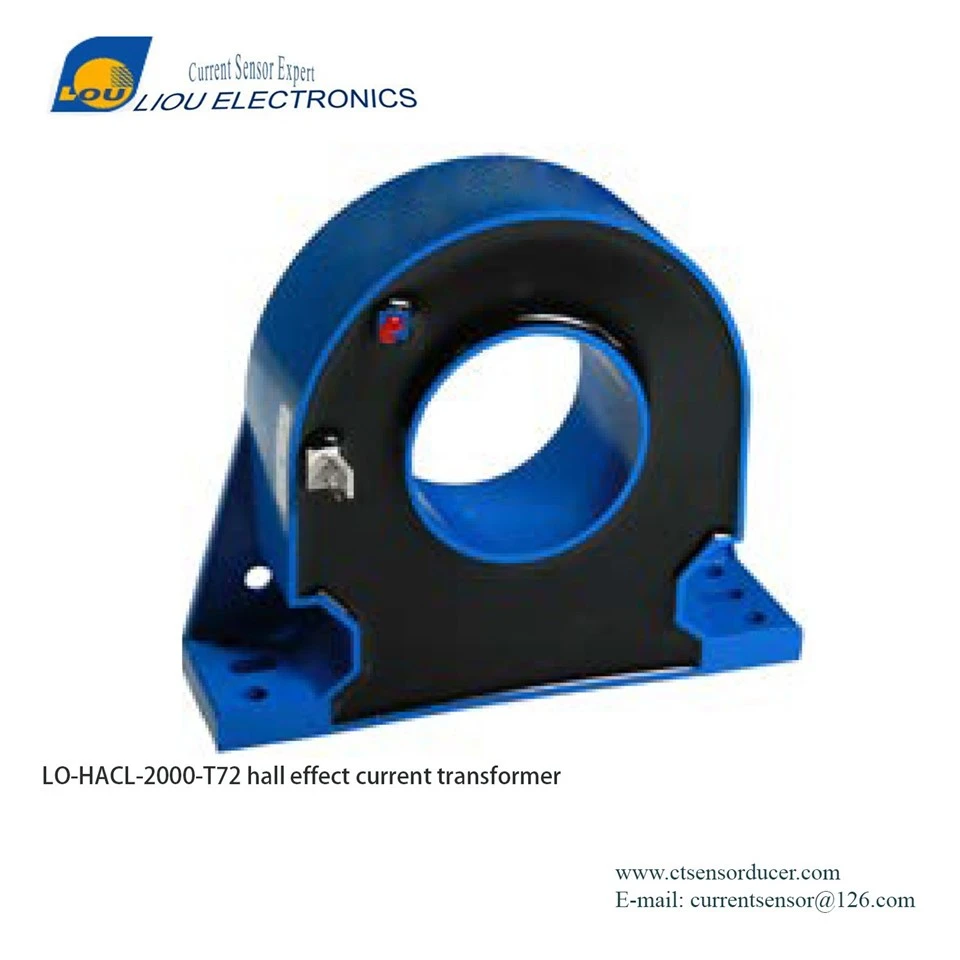
How to select the appropriate magnetic core for Closed Loop Hall Effect Sensors?
 Jul 06, 2026|
 Selecting the appropriate magnetic core for closed-loop Hall effect sensors is a critical decision that significantly impacts the performance and reliability of these sensors. As a leading supplier of closed-loop Hall effect sensors, we understand the importance of this choice and are here to guide you through the process.
Understanding Closed-Loop Hall Effect Sensors
Closed-loop Hall effect sensors are widely used in various applications, including power electronics, renewable energy systems, and industrial automation. These sensors operate on the principle of the Hall effect, where a voltage is generated across a conductor when it is placed in a magnetic field. In a closed-loop configuration, the sensor uses feedback to maintain a constant magnetic field, resulting in high accuracy and linearity.
Importance of Magnetic Core Selection
The magnetic core is a crucial component of a closed-loop Hall effect sensor. It plays a vital role in concentrating the magnetic field and enhancing the sensor's sensitivity. The choice of magnetic core material and design can significantly affect the sensor's performance, including its accuracy, linearity, bandwidth, and temperature stability.
Factors to Consider When Selecting a Magnetic Core
Material Properties
- Magnetic Permeability: The magnetic permeability of the core material determines its ability to concentrate the magnetic field. Higher permeability materials, such as ferrite and amorphous alloys, are often preferred for closed-loop Hall effect sensors as they can provide higher sensitivity and better performance.
- Saturation Flux Density: The saturation flux density of the core material indicates the maximum magnetic field it can handle before it saturates. It is important to choose a core material with a high saturation flux density to avoid saturation and maintain linearity in high-current applications.
- Coercivity: The coercivity of the core material is a measure of its resistance to demagnetization. Low coercivity materials are preferred for closed-loop Hall effect sensors as they can reduce hysteresis and improve the sensor's accuracy.
Core Shape and Size
- Shape: The shape of the magnetic core can affect the sensor's performance. Common core shapes include toroidal, E-core, and U-core. Toroidal cores are often preferred for closed-loop Hall effect sensors as they provide a closed magnetic path, which reduces magnetic leakage and improves the sensor's efficiency.
- Size: The size of the magnetic core is also an important consideration. Larger cores can provide higher magnetic flux and better performance, but they also increase the size and cost of the sensor. It is important to choose a core size that is appropriate for the application requirements.
Temperature Stability
- Temperature Coefficient: The temperature coefficient of the core material indicates how its magnetic properties change with temperature. It is important to choose a core material with a low temperature coefficient to ensure stable performance over a wide temperature range.
- Thermal Conductivity: The thermal conductivity of the core material affects its ability to dissipate heat. Higher thermal conductivity materials can help to reduce the temperature rise of the sensor and improve its reliability.
Types of Magnetic Cores for Closed-Loop Hall Effect Sensors
Ferrite Cores
Ferrite cores are widely used in closed-loop Hall effect sensors due to their high magnetic permeability, low coercivity, and good temperature stability. They are available in various shapes and sizes, making them suitable for a wide range of applications. Ferrite cores are also relatively inexpensive, which makes them a popular choice for cost-sensitive applications.
Amorphous Alloy Cores
Amorphous alloy cores offer excellent magnetic properties, including high magnetic permeability, low coercivity, and high saturation flux density. They are also more resistant to temperature changes than ferrite cores, making them suitable for high-temperature applications. However, amorphous alloy cores are more expensive than ferrite cores, which may limit their use in some applications.
Nanocrystalline Cores
Nanocrystalline cores are a relatively new type of magnetic core material that offers superior magnetic properties compared to ferrite and amorphous alloy cores. They have high magnetic permeability, low coercivity, and high saturation flux density, as well as excellent temperature stability. Nanocrystalline cores are also more compact and lightweight than other types of cores, making them suitable for applications where space is limited.
Application-Specific Considerations
Power Electronics
In power electronics applications, such as inverters and converters, closed-loop Hall effect sensors are used to measure the current and voltage. The magnetic core selection for these applications should consider the high current and voltage levels, as well as the switching frequencies. Ferrite cores are often preferred for these applications due to their high magnetic permeability and low cost.
Renewable Energy Systems
In renewable energy systems, such as solar and wind power generation, closed-loop Hall effect sensors are used to measure the current and voltage in the power conversion process. The magnetic core selection for these applications should consider the high power levels, as well as the environmental conditions. Amorphous alloy and nanocrystalline cores are often preferred for these applications due to their high magnetic properties and temperature stability.
Industrial Automation
In industrial automation applications, such as motor control and robotics, closed-loop Hall effect sensors are used to measure the current and position. The magnetic core selection for these applications should consider the high accuracy and reliability requirements, as well as the space limitations. Toroidal cores are often preferred for these applications due to their closed magnetic path and high efficiency.
Conclusion
Selecting the appropriate magnetic core for closed-loop Hall effect sensors is a critical decision that requires careful consideration of various factors, including material properties, core shape and size, temperature stability, and application-specific requirements. As a leading supplier of closed-loop Hall effect sensors, we have the expertise and experience to help you choose the right magnetic core for your application. If you have any questions or need further assistance, please feel free to contact us for a consultation. We look forward to working with you to provide the best solutions for your closed-loop Hall effect sensor needs.