




What is the power density of a switching power supply inverter?
 Dec 15, 2025|
 What is the power density of a switching power supply inverter?
Hey there! As a supplier of switching power supply inverters, I often get asked about the power density of these nifty devices. So, let's dive right in and break it down in a way that's easy to understand.
First off, what exactly is power density? Simply put, power density refers to how much power a device can deliver relative to its size or volume. In the case of a switching power supply inverter, it's all about packing as much power - delivering capability into the smallest possible physical space.
Think about it this way. You've got a small box (the switching power supply inverter), and inside that box, there are all sorts of components working together to convert DC power into AC power. The power density tells you how well those components are doing their job in terms of squeezing out a lot of power without the inverter taking up a huge amount of room.
So, why is power density so important? Well, there are a few key reasons. In today's world, where space is at a premium, especially in things like consumer electronics, industrial equipment, and renewable energy systems, having a high - power - density switching power supply inverter means you can design smaller and more compact devices. This is not only great for portability but also for reducing the overall footprint of installations.
Take, for example, a solar power system. You want to fit as much power conversion capability as possible into a limited space on your rooftop or in a small utility room. A high - power - density switching power supply inverter allows you to do just that, making it easier to integrate the solar system into your property.
Another reason power density matters is efficiency. Generally, inverters with higher power densities are often more efficient because they're designed to make the most of the available space and components. This means less heat generation and less wasted energy, which in turn saves you money on your electricity bills over time.
Now, let's talk about how power density is measured. It's usually expressed in watts per cubic inch (W/in³) or watts per liter (W/L). To calculate the power density of a switching power supply inverter, you need to know its output power (in watts) and its volume (in cubic inches or liters). Then, you just divide the output power by the volume.
For instance, if you have a switching power supply inverter with an output power of 500 watts and a volume of 100 cubic inches, the power density would be 5 W/in³ (500 watts divided by 100 cubic inches).

But achieving a high power density isn't always a walk in the park. There are several challenges that come with trying to pack more power into a smaller space. One of the main challenges is heat management. As the power density increases, so does the amount of heat generated by the components inside the inverter. If this heat isn't properly dissipated, it can lead to overheating and reduced performance or even damage to the inverter.
To deal with heat management, we often use advanced cooling techniques such as heat sinks, fans, or even liquid cooling systems. These help to transfer the heat away from the components and keep the inverter operating at a safe temperature.
Another challenge is component miniaturization. To increase power density, we need to use smaller and more efficient components. This requires a lot of research and development to find the right balance between size, performance, and cost.
At our company, we're constantly working on improving the power density of our switching power supply inverters. We invest in the latest technologies and manufacturing processes to make sure our products offer the best possible performance in a compact form factor.
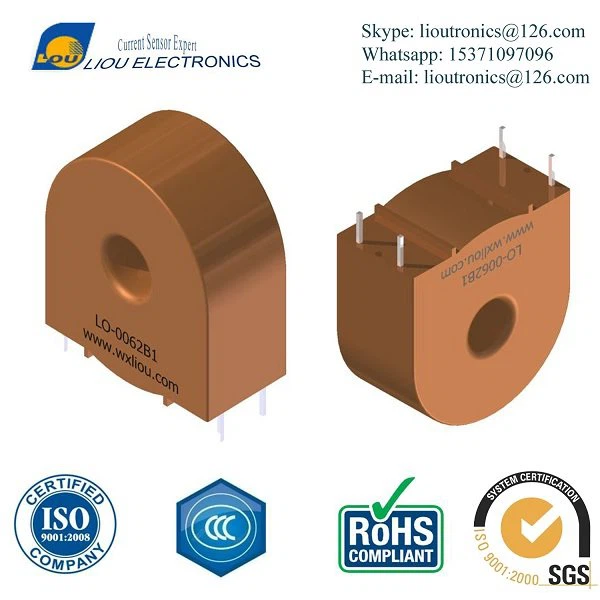
We also pay close attention to the quality of the components we use. For example, when it comes to measuring the current in our inverters, we rely on high - quality current transformers. Our selection includes High Precision Current Transformer, which offers accurate current measurement, and High Frequency Wide Band Current Transformer, ideal for applications that require broad - spectrum frequency response. And if you're looking for a more compact solution, our Current Transformer PCB CT is a great option that can be easily integrated into PCB designs.
These current transformers play a crucial role in the performance and safety of our switching power supply inverters. They help us monitor the current flow accurately, which is essential for proper control and protection of the inverter.
In conclusion, the power density of a switching power supply inverter is a key factor that determines its performance, size, and efficiency. A high - power - density inverter offers numerous benefits in terms of space savings, energy efficiency, and overall system performance.
If you're in the market for a switching power supply inverter and want to learn more about our high - power - density solutions, we'd love to hear from you. Whether you're working on a small consumer electronics project or a large - scale industrial application, our team of experts is ready to help you find the right inverter for your needs. Get in touch with us to start a fruitful procurement discussion!
References
- Some General Knowledge about Power Electronics books from local library
Remember, when it comes to switching power supply inverters, power density makes all the difference! Let's talk and see how we can serve your power conversion needs.