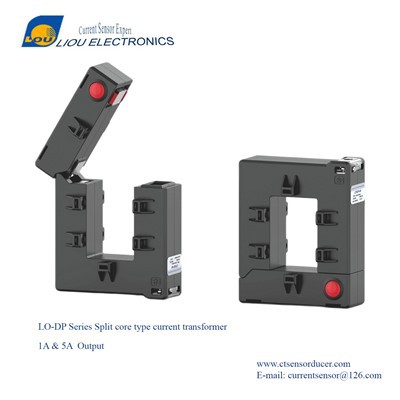
How to safely replace a current transformer after it is damaged
 Jun 10, 2026|
 I. Power Deactivation and Safety Isolation
Disconnect Primary Power Supply: Disconnect the upstream circuit breaker or isolating switch to ensure no power is supplied for work.
Hang Warning Signs: Hang a "Do Not Close, People Working" sign on the control cabinet to prevent accidental power restoration.
Short-Circuit Secondary Circuit: Reliably short-circuit terminals S1-S2 using dedicated shorting clips or wires to prevent high voltage from being generated during disassembly.
II. Standardized Disassembly and Installation
Removing the Old Current Transformer (CT): Loosen the mounting bracket and carefully remove the damaged current transformer; If it is a through-core type, avoid damaging the primary cable insulation.
Installing the New CT: Ensure the new CT's transformation ratio and accuracy class are consistent with the original model;
P1 terminal faces the power supply side, P2 faces the load; The through-core wire should be vertically centered; For open-type CTs, tighten the screws after closing; Connect the instrument to S1 on the secondary side, and reserve a grounding terminal for S2.
III. Wiring Inspection and Power Restoration
Wiring Confirmation: Use 2.5mm² or larger copper core wire to connect the secondary circuit; Ensure a reliable ground connection at one point on terminal S2, connected to a dedicated grounding copper busbar.
Functional Testing: Verify the correct turns ratio and polarity using a turns ratio and polarity tester; Check insulation resistance: primary to secondary ≥1000MΩ, secondary to ground ≥10MΩ.
Gradual Restoration: First, energize under no-load conditions and observe for any abnormalities; then, operate under load and use a clamp meter to verify the primary and secondary current ratios.
⚠️ Never disconnect the secondary circuit without short-circuiting to prevent high-voltage injury.