How to select a suitable general-purpose current transformer
 Jul 27, 2026|
 I. Matching Basic Adaptation Parameters
Rated Voltage: Match the rated voltage of the system in the circuit. For typical low-voltage scenarios, select the 0.66kV specification.
Rated Frequency: For ordinary 50Hz power systems, directly select the general 50Hz model. For special scenarios such as frequency converters, select a wide-frequency model.
II. Determining Current Transformation Parameters
Rated Primary Current: Select a specification 1.2 to 1.5 times higher than the maximum operating current of the circuit, ensuring the operating current is within 20% to 120% of the rated value.
Rated Secondary Current: For typical short-distance scenarios, select the general 5A specification. For transmission distances exceeding 100 meters, select the 1A specification to reduce line losses.
III. Matching Accuracy and Load Capacity
Accuracy Class: Select Class 1 for general monitoring, Class 0.5 for general metering, and Class 5P/10P for relay protection scenarios.
Rated Capacity: Calculate the total power consumption of the secondary circuit conductors and instruments. The selected capacity must cover the total power consumption with a 30% margin.
IV. Testing Withstand Capacity and Structural Compatibility
Dynamic and Thermal Stability Parameters: Match the system's short-circuit current level to prevent damage to the transformer during faults.
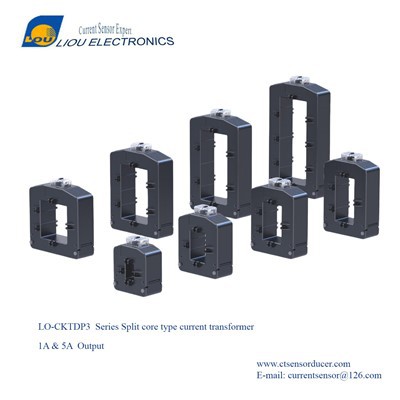
Installation Structure: Select appropriate structures such as rail-mounted or through-type according to site space. For installation without power interruption, an open-type model is available.